Use Cases

Start with local commerce. Unlock more of the local economy over time.

Stabletown is one programmable economic network for places, not a collection of unrelated products. The practical starting point is local commerce. As the network grows, the same infrastructure can support more targeted programs and, eventually, deeper coordination around community capital and public finance.

Available now = supported by the current Stabletown platform
Emerging = product direction that requires additional product, partner, or regulatory work
01

Start with local commerce

Give people a reason to spend locally.

02

Reuse the network

Apply the same infrastructure to more local economic goals.

03

Extend from commerce into capital

Coordinate the projects and financing that shape the place itself.

01 · Start with local commerce

Give people a reason to spend locally.

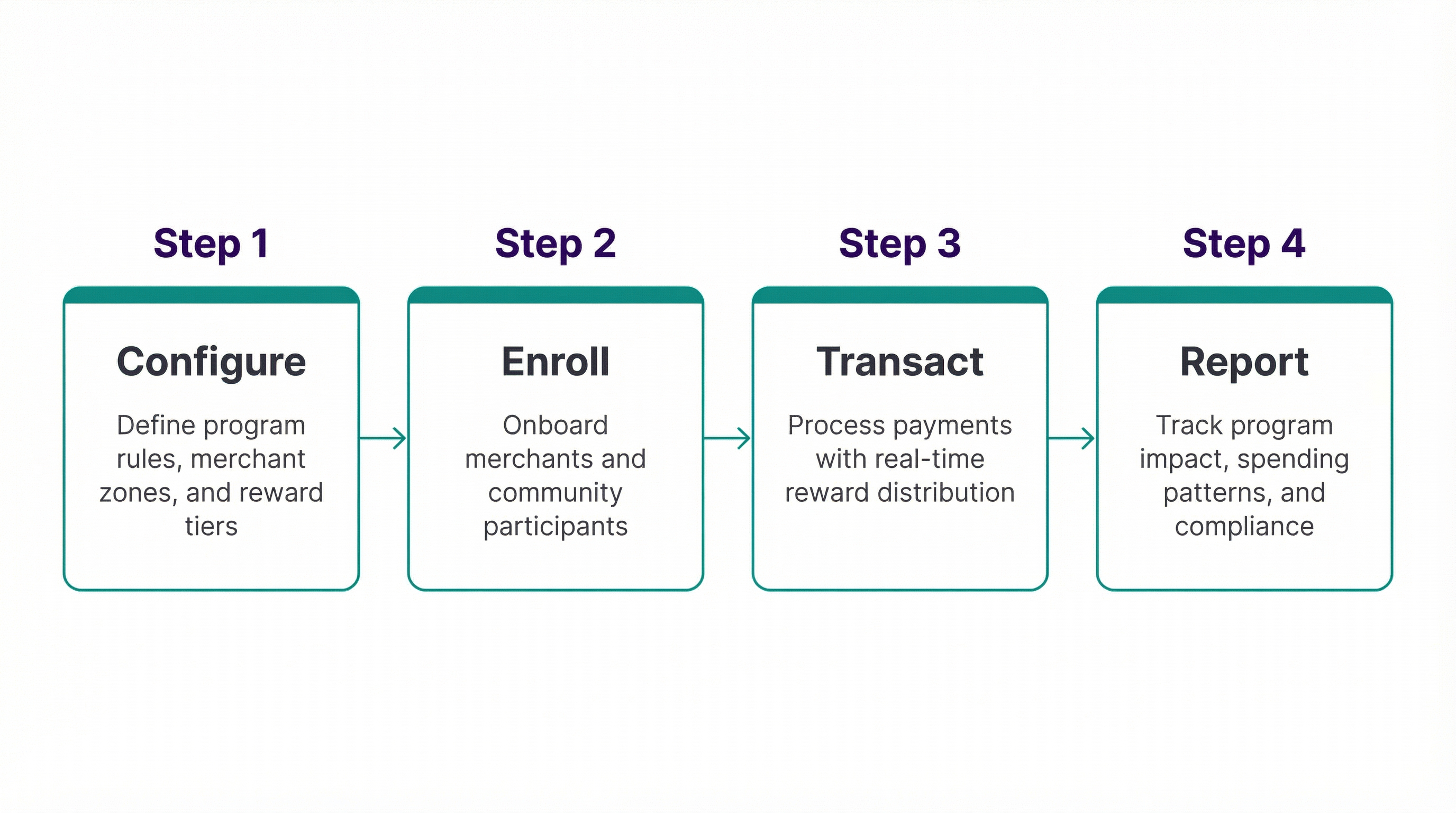
Stabletown enters a place through frequent, understandable economic activity: institutions and sponsors fund incentives, residents or visitors use them with participating merchants, and program operators can see what happened. Local Dollars is the first consumer-visible application of this infrastructure.

What this unlocks

The first program establishes more than a campaign: it creates a reusable network of institutions, sponsors, merchants, participants, rules, transactions, and outcomes.

Local commerce rewards program flow

Local Dollars · the first application

Shop-local rewards and corridor activation

Available now

Launch a sponsor- or institution-funded local-commerce program that directs marginal spending toward participating local businesses. Stabletown coordinates program rules, merchant participation, participant experience, value attribution, and reporting while the payment or distribution rail can vary by deployment.

  • Target incentives to a defined geography or merchant network
  • Give residents a simple, consumer-visible reason to participate
  • Measure program activity without tying the product to one payment rail
Explore Local Dollars →

Downtowns, Main Streets, commercial districts

Merchant and district campaigns

Available now

Run bounded campaigns around a corridor, season, opening, recovery period, or merchant objective without rebuilding the community network from scratch. Institutions can configure who participates, where incentives apply, and what evidence the program should produce.

  • Reuse an existing merchant network for new campaigns
  • Coordinate sponsors and local operators around one set of rules
  • Compare program performance over time instead of running one-off promotions
02 · Reuse the network

Apply the same infrastructure to more local economic goals.

Once participants, merchants, institutions, sponsors, eligibility rules, and reporting relationships already exist, a place can use the Stabletown network for more than shop-local rewards. The application changes; the underlying network does not have to start over.

What this unlocks

Each additional program deepens the local economic graph and makes the network more useful to the institutions, merchants, and people already connected to it.

Rules and eligibility flow for a targeted local program

Programmable eligibility and spending rules

Targeted benefits, rebates, and public-purpose distributions

Available now

Configure benefits or funded value around a defined purpose, participant group, merchant category, geography, or time window. Stabletown provides the program logic and application-level evidence needed to operate and review the program; underlying funds and regulated services remain with the appropriate providers.

  • Define participant eligibility and permitted uses by program
  • Create auditable records of program activity and rule application
  • Support public, philanthropic, or institution-funded objectives without inventing a new payment system for each one

Turn institutional spending power into local demand

Employer and anchor-institution local benefits

Available now

Employers, hospitals, universities, utilities, banks, foundations, and other anchor institutions can fund benefits or incentives that encourage employees or community members to spend with participating local businesses. Stabletown makes the program configurable and measurable rather than dependent on a single card, wallet, or processor.

  • Connect an anchor institution to a defined local merchant network
  • Use one program layer across recurring or seasonal benefits
  • Measure participation and merchant activity for the funding institution

Tourism and event-linked local commerce

Visitor, event, and destination incentives

Available now

Give visitors a clear incentive to discover and spend with local businesses during a trip, festival, conference, or destination campaign. The same merchant network and rules infrastructure can support time-bounded visitor programs alongside resident-facing programs.

  • Target incentives by event, season, district, or visitor cohort
  • Drive incremental traffic toward participating local merchants
  • Give tourism and destination partners program-level evidence

Place-based interventions with clear rules

Recovery, grant, and neighborhood programs

Available now

Support recovery incentives, grant-funded campaigns, neighborhood revitalization, or other bounded economic-development programs through the same participant, merchant, rules, and reporting infrastructure. The goal is not one universal program; it is reusable coordination capacity for the place.

  • Adapt existing network relationships to a new policy or funding source
  • Keep program rules and evidence legible to operators and funders
  • Avoid rebuilding merchant and participant infrastructure for every intervention
03 · Extend from commerce into capital

Coordinate the projects and financing that shape the place itself.

The same thesis eventually reaches beyond transactions. Places also need better infrastructure for connecting projects, institutions, financing needs, advisors, capital, disclosures, approvals, servicing information, and community outcomes. Stabletown's community-finance domain, Munus, applies the network model to that layer.

What this unlocks

This is the long arc: local commerce establishes the network; repeated programs deepen it; community finance brings projects and capital into the same place-based economic system.

Community finance · Munus

Project readiness and capital-stack coordination

Available now

Organize project information, financing needs, participants, approvals, documents, and capital-stack context in one structured workflow. Stabletown can help project teams and public-sector users create a clearer operating record before any regulated financing execution occurs.

  • Structure project and financing information before market execution
  • Keep roles, decisions, evidence, and handoffs legible across stakeholders
  • Create a durable record that can support qualified financial and legal partners
Explore community finance →
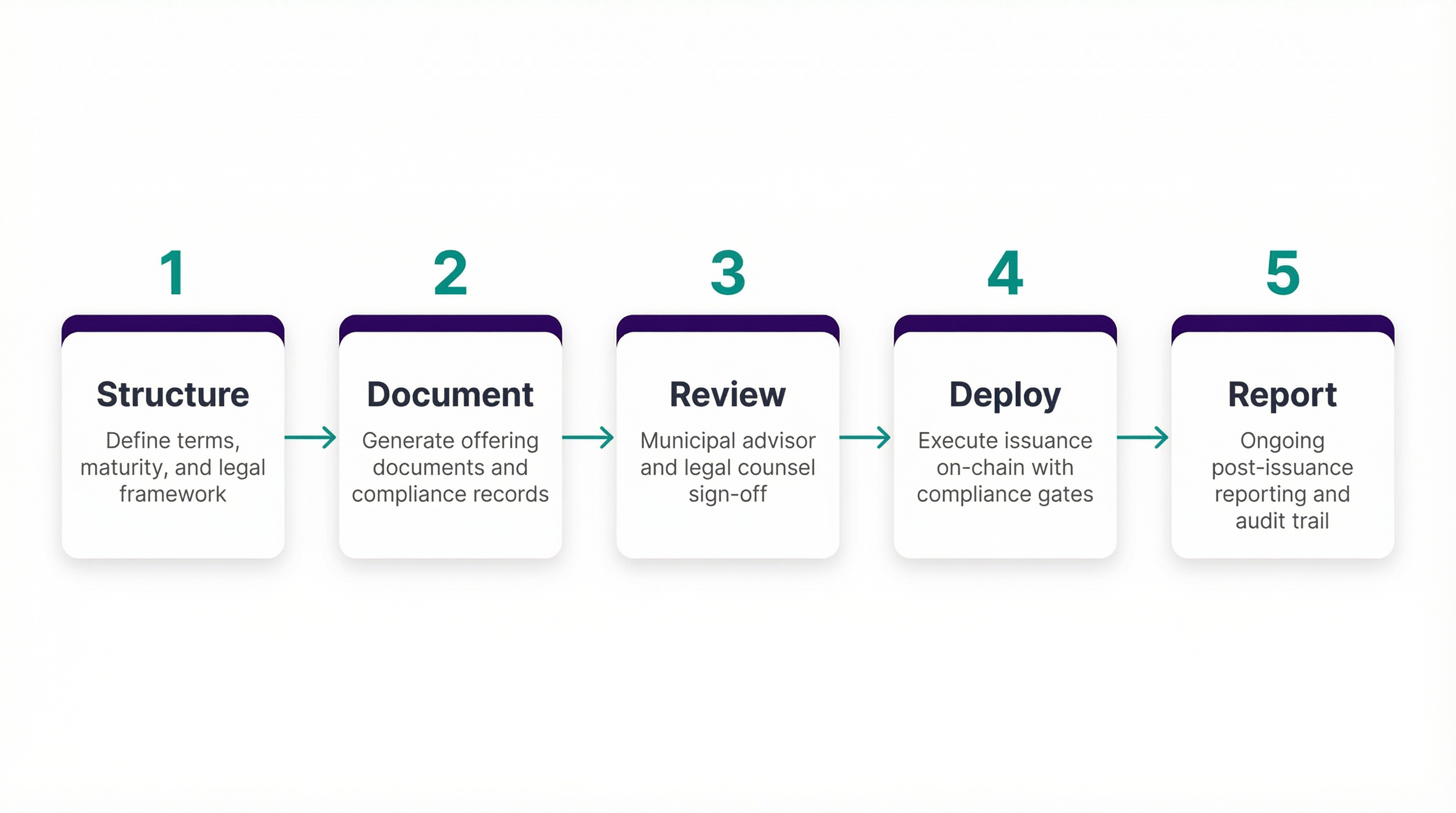
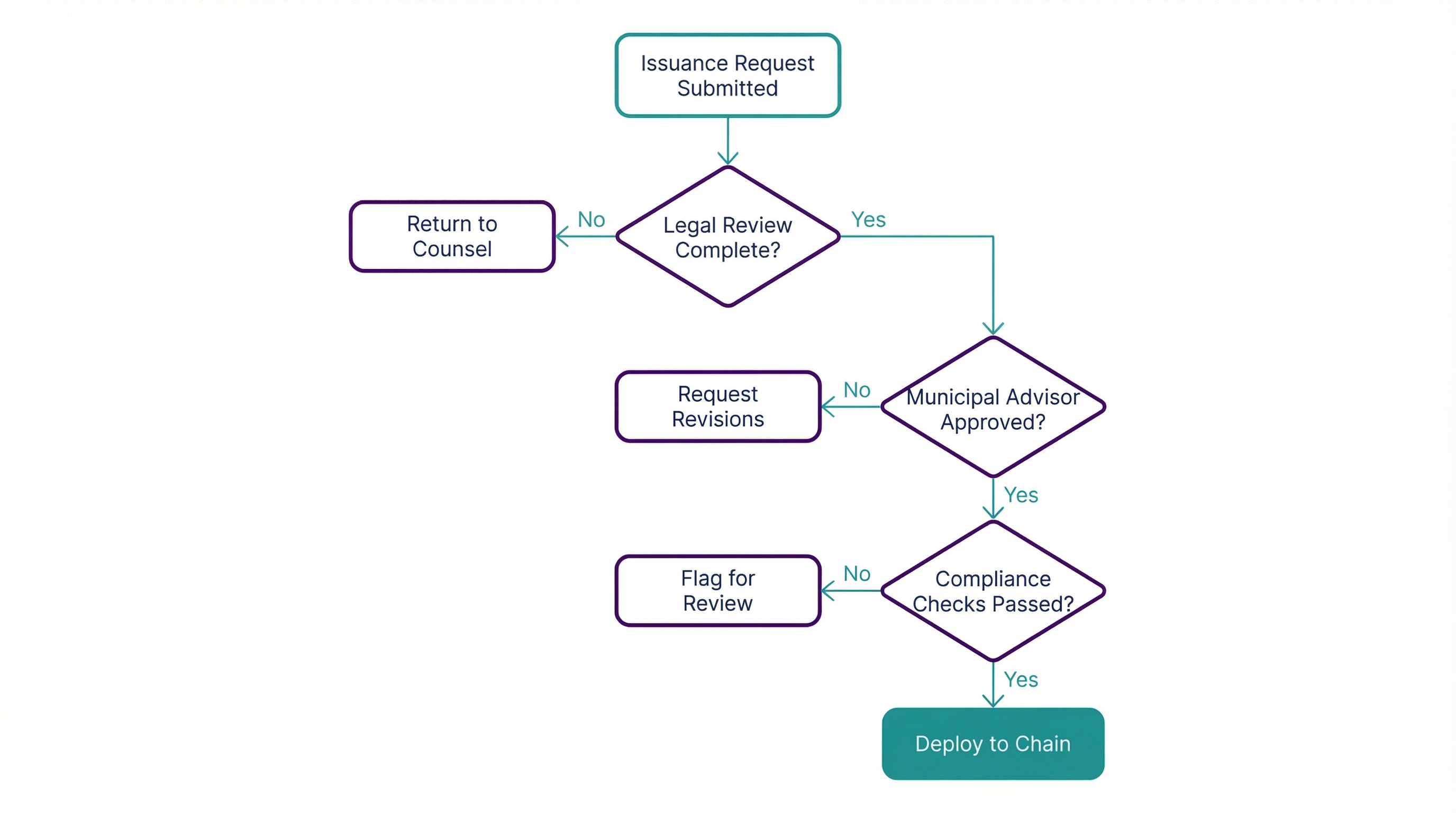
Public finance workflow coordination diagram

Issuer, advisor, counsel, and market coordination

Public-finance workflow and evidence

Available now

Support role-aware workflows, structured deal records, document and disclosure coordination, reporting, lifecycle tracking, and qualified-partner handoffs around public-finance processes. Municipal advisors, bond counsel, underwriters, broker-dealers, trustees, and other regulated professionals retain the roles they perform today.

  • Improve coordination without disintermediating established market roles
  • Create structured records for approvals, documents, and post-issuance work
  • Prepare workflows for increasingly digital infrastructure over time
For issuers and advisors →

Broader participation in local projects

Compliant community co-investment

Emerging

Over time, Stabletown is intended to make community investment easier to understand and, where appropriate, easier to participate in through qualified and regulated partners. The opportunity is to connect people more legibly to the projects and capital structures shaping their communities without pretending securities rules or professional market roles disappear.

  • Make project financing more understandable to community participants
  • Support compliant participation models through qualified partners
  • Connect community engagement to real project and financing information

Modern rails, existing market discipline

Digitally native public-finance infrastructure

Emerging

Stabletown is building toward a future in which structured workflows and records can connect to more digitally native issuance, settlement, servicing, and distribution infrastructure. The rail may change; legal structure, disclosure obligations, regulated execution, and institutional trust remain essential.

  • Connect structured workflows to modern financial infrastructure when appropriate
  • Preserve qualified-partner and regulated-market responsibilities
  • Create a path toward more programmable community capital without making premature tokenization claims

One network, progressively deeper applications

The point is not to launch eight disconnected programs.

The point is to establish economic infrastructure a place can reuse. Local commerce creates the first useful network. New programs build on the same relationships and evidence. Community finance extends that network from everyday commerce into the projects and capital that shape the place itself.

Start with one local economic goal.

For most places, the right first step is a bounded local-commerce program that can prove demand, merchant participation, program rules, and measurement while establishing infrastructure the next use case can reuse.

Local Dollars engagements move from free modeling to the Launch Workshop and then a managed pilot. See pricing · Read the methodology.