Multi-tenant program core
Organizations can configure distinct programs, operators, participants, merchants, sponsors, and rules on shared Stabletown infrastructure without collapsing every deployment into one system-wide program.
Platform
Stabletown is building the programmable economic network for places. The platform gives institutions software to configure local economic programs, connect participants and merchants, apply rules, track program activity, and measure outcomes — while keeping the underlying financial rails replaceable.
What Stabletown owns
The strategic asset is not a card, wallet, token, or payment processor. It is the reusable network of institutions, sponsors, participants, merchants, programs, rules, transactions, projects, and outcomes that a place can use again and again.
Rent the rails. Own the network.
Organizations can configure distinct programs, operators, participants, merchants, sponsors, and rules on shared Stabletown infrastructure without collapsing every deployment into one system-wide program.
Stabletown models the relationships between institutions, sponsors, participants, merchants, programs, geography, transactions, projects, and outcomes so a place does not have to rebuild those connections for every new initiative.
Programs can define who may participate, where value may be earned or used, which merchants qualify, what geography applies, and which conditions govern an incentive or benefit.
The platform interprets program logic, attributes rewards or program value, supports balances or entitlements where applicable, and coordinates mixed-funding or other checkout behavior without making one payment rail the product.
Stabletown maintains an application-level record of program events, value attribution, transactions, redemptions, approvals, and state changes so authorized operators can trace what happened. That record is not a claim that Stabletown custodies money or securities.
Resident and merchant workflows are designed around simple participation and acceptance, while the underlying QR, card, wallet, bank, or other transaction rail can vary by deployment.
Sponsors and program owners can be represented explicitly, with role-aware administration, permissions, funding context, program state, and operational controls rather than being treated as an afterthought to payments.
Stabletown turns program activity into structured reporting for authorized operators and partners: participation, merchant activity, program usage, rule outcomes, and other evidence defined for the deployment.
The platform is designed to connect to external payment, wallet, banking, identity, stable-value, and regulated capital-market infrastructure without surrendering the program and network logic above those rails.
One platform, different roles
Program operation, governance, merchant participation, participant experience, ledger evidence, and reporting are different views into the same underlying network. The images below are representative product views; they are not customer deployment screenshots.
Stabletown connects institution-funded program logic to participant and merchant experiences. Operators define the program; participants earn, receive, or use value under those rules; merchants participate through the deployment architecture selected for that place.
Responsibility architecture
Stabletown owns the place-specific network and software primitives. Financial infrastructure is selected for the deployment, and regulated community-finance roles stay with the qualified parties responsible for them.
Canonical architecture
Stabletown keeps the place-specific program, relationship, rules, evidence, and experience layer coherent while qualified providers and professionals perform the financial or regulated roles beneath and around it.
Stabletown owns / controls
The persistent network and software layer
Partners provide
Selected per deployment. Provider exploration or technical readiness is not the same thing as a live production partnership.
Qualified professionals perform
Munus can structure workflow, records, evidence, and handoffs without absorbing roles reserved to regulated market participants.
The economic network of a place
Local Dollars establishes useful relationships through everyday commerce. Those relationships, rules, records, and evidence can support more local-economic programs and, eventually, structured project and community-finance workflows. That continuity is the reason Local Dollars and Munus belong to one platform.
Start here
Institution
owns or operates
Sponsor
funds an intervention
Program
sets the economic goal
Resident
earns or receives value
Merchant
participates under rules
The shared coordination layer
The network is the reusable relationship and evidence layer. Payment rails and regulated market roles remain implementation or partner layers.
Reuse the network
Extend into capital
Project
organizes a local need
Capital
maps funding & financing
Market partners
execute regulated roles
Product proof
Stabletown has substantial working software and reproducible seeded demonstrations. That should be visible without converting demos into customer traction, technical integrations into partnerships, or future regulated capabilities into present execution.
Multi-tenant programs and policy rules, canonical ledger/audit foundations, participant and merchant commerce, sponsor/operator workflows, role-aware administration, and Munus project/deal-room/capital-stack workflows are represented in the built software foundation.
Stabletown has demonstrated sponsor-funded value routing, spendable-versus-ledger state, policy-gated commerce, resident community-finance views, and shared project/capital state across resident and professional surfaces. Demonstration data is not customer production volume.
Cards, wallets, bank rails, identity/compliance services, stable-value infrastructure, and settlement providers are chosen per deployment. Technical readiness or exploration does not imply a production integration or signed partnership.
Live securities distribution, underwriting, municipal advisory, legal work, custody, transfer agency, and regulated settlement remain with qualified providers and professionals. Stabletown can build workflow and evidence around those roles without claiming them.
These are public, inspectable product surfaces and planning tools. They are demonstrations of Stabletown's product model, not claims of a live customer deployment.
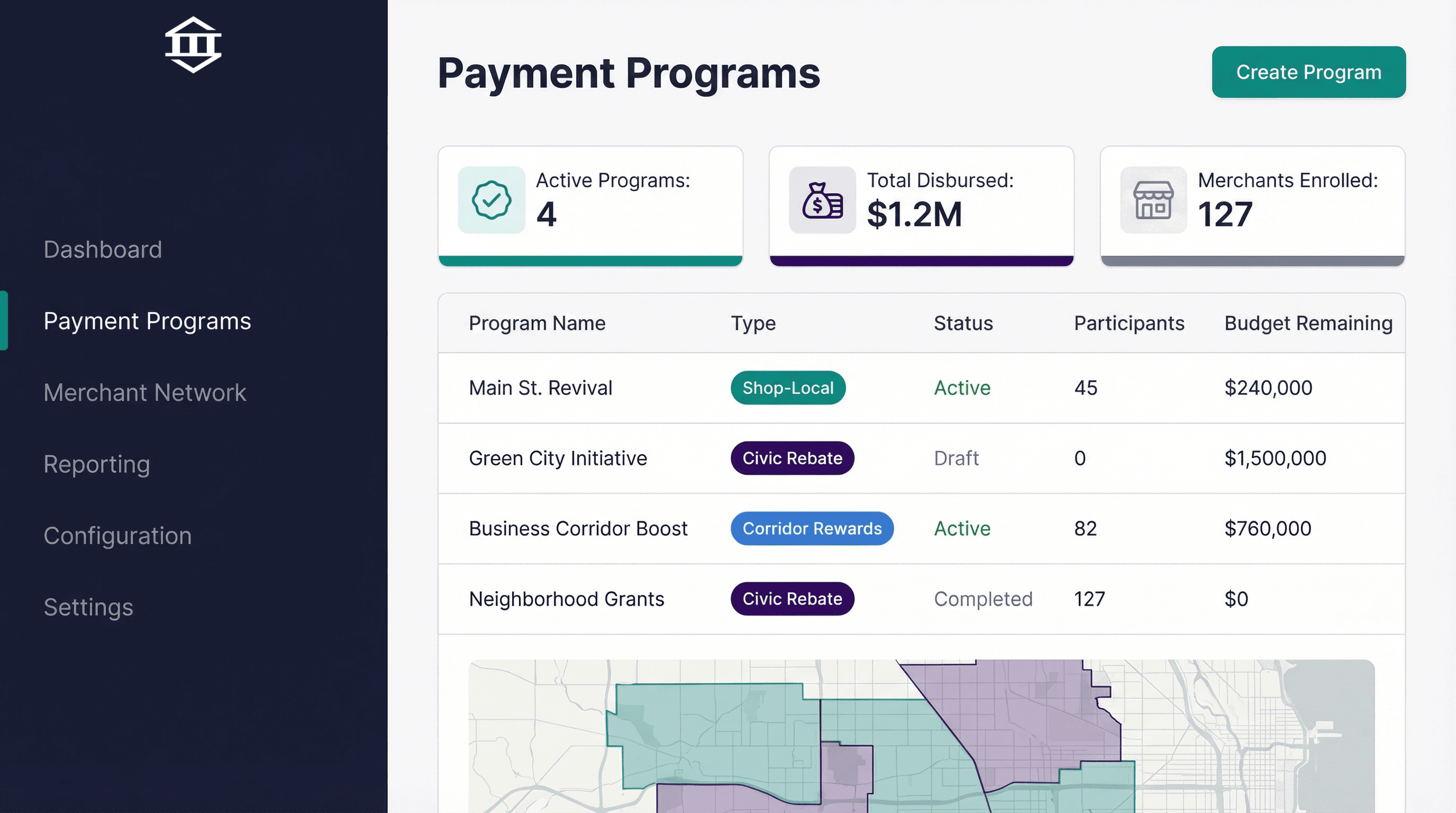
Local commerce
Shows the operating surface around payments and rewards. Representative product view; not a customer deployment screenshot.
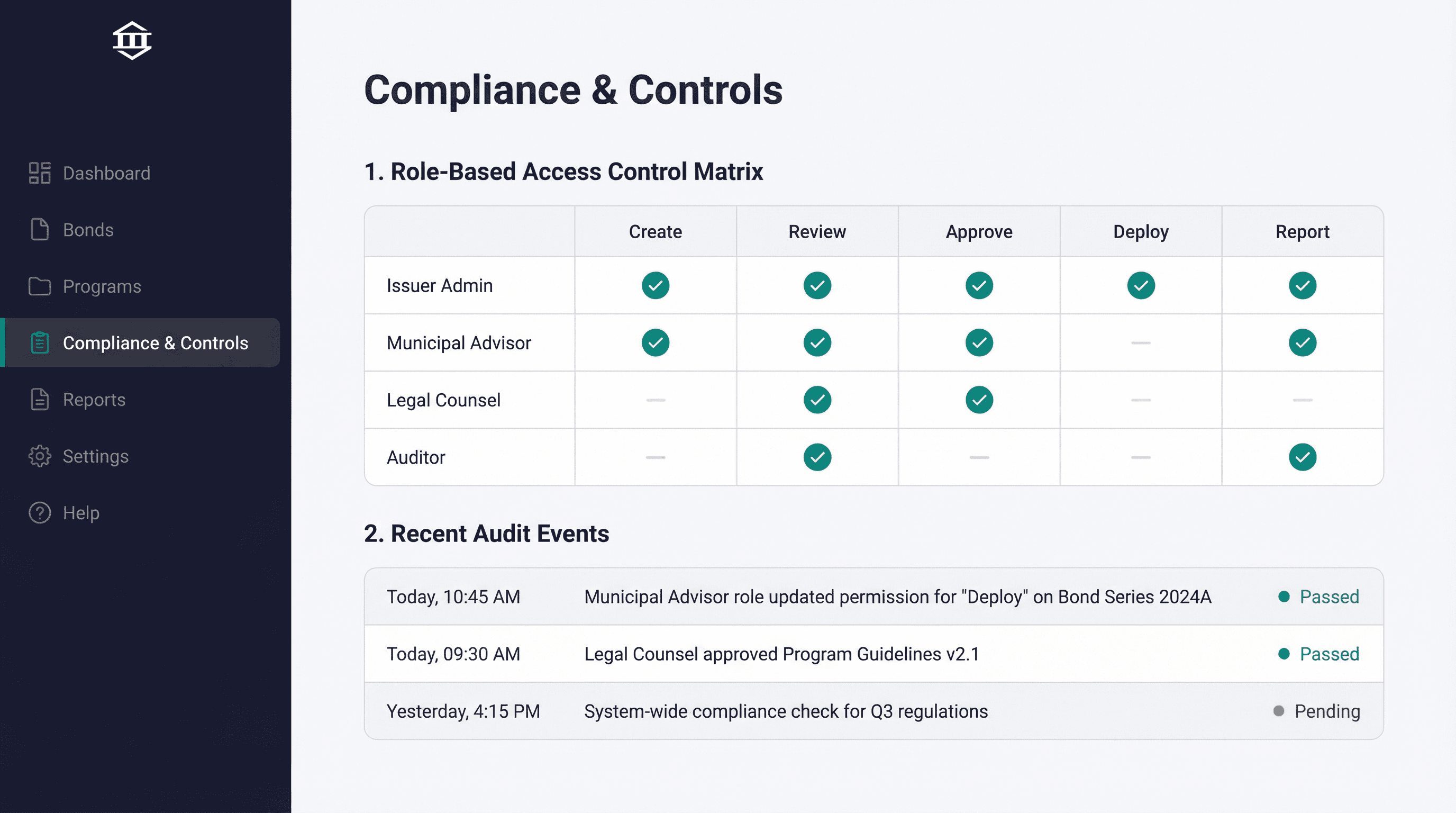
Governance
Shows role-aware administration and control concepts. Representative product view; not evidence of a specific regulated provider relationship.
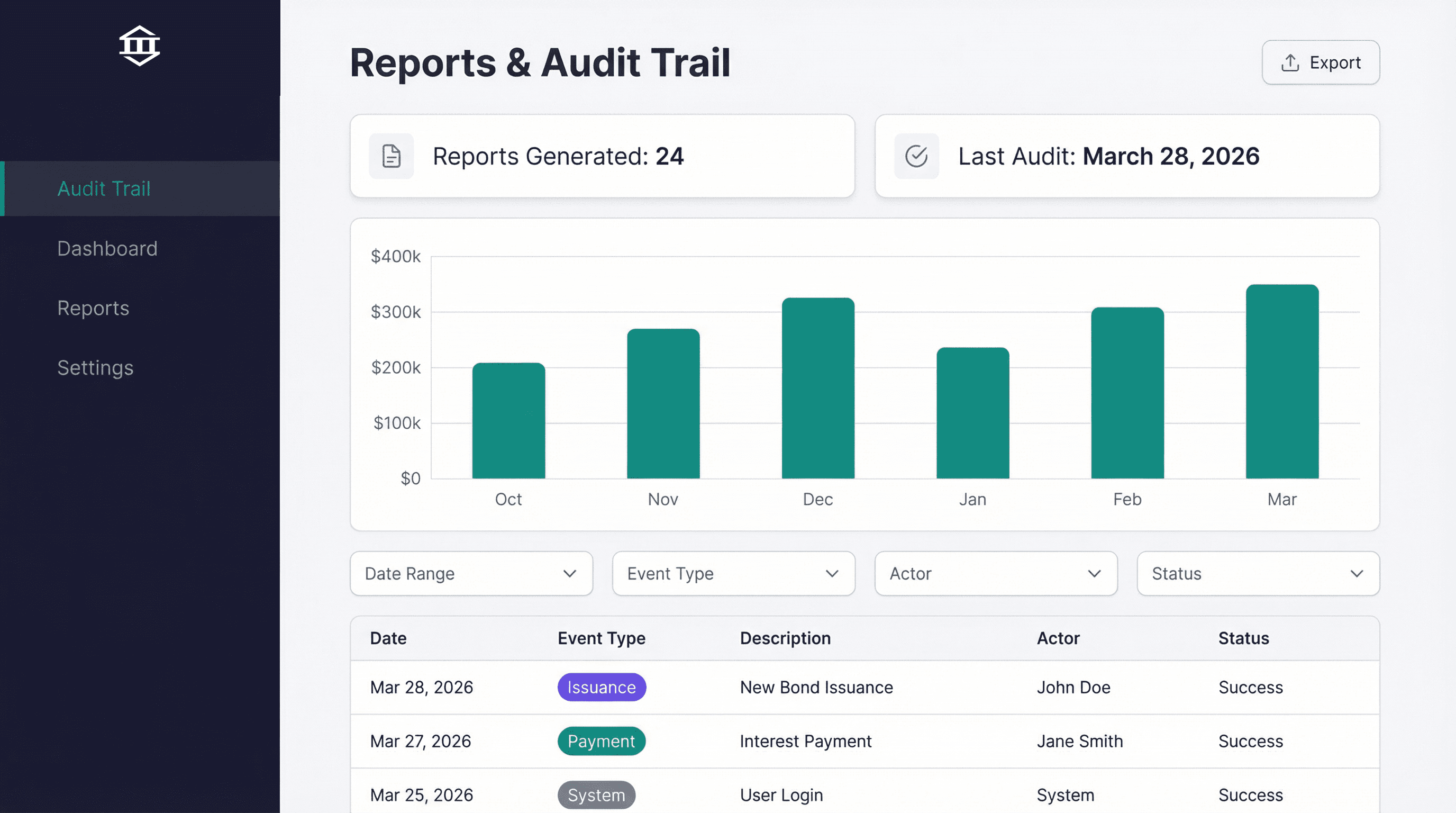
Evidence
Shows how program activity can become structured evidence for authorized operators. Representative product view; not measured customer outcomes.
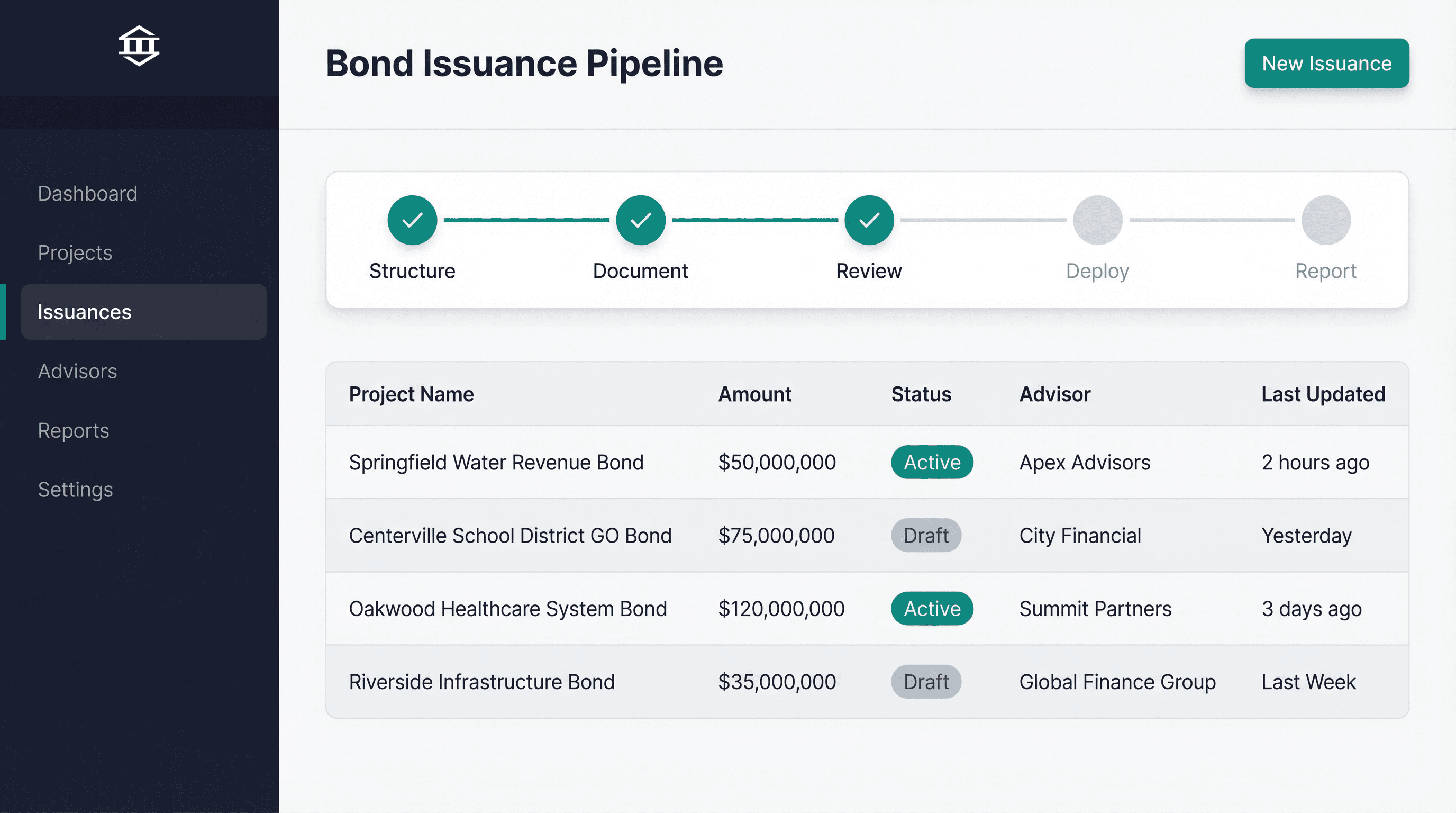
Advanced application
Shows the community-finance workflow direction downstream of local commerce. Representative product view; not securities issuance or distribution by Stabletown.
Start with local commerce
The first network is established through something frequent and easy to understand: local commerce. An institution or sponsor funds a program, participants earn or receive an incentive, merchants participate under defined rules, and Stabletown records the resulting program activity.
The important result is not only the campaign. It is the reusable local network left behind: institutions, merchants, participants, rules, transaction history, and evidence that can support the next program.
Initial economic loop
Institution or sponsor funds a program
Participant earns or receives an incentive
Participant uses it with an eligible merchant
Stabletown applies the program rules and records the event
Authorized operators see evidence and outcomes
The same network can support the next intervention
Advanced application
Places also need to coordinate projects, financing needs, institutions, advisors, approvals, documents, capital, and long-term evidence. Munus applies Stabletown's structured relationships, role-aware workflows, shared records, and reporting model to community finance.
Today that means software for project and financing workflows, structured records, capital-stack visibility, lifecycle state, reporting, and qualified-partner handoffs. Over time, the architecture is intended to support increasingly digitally native public-finance infrastructure while regulated execution remains with qualified market participants.
Start with a bounded local-commerce use case. We can map the institution, sponsor, merchant network, participant experience, rules, measurement plan, and the external rails needed to operate it.
Local Dollars engagements move from free modeling to the Launch Workshop and then a managed pilot. See pricing · Read the methodology.